This week’s live video chat was a deviation from my norm.
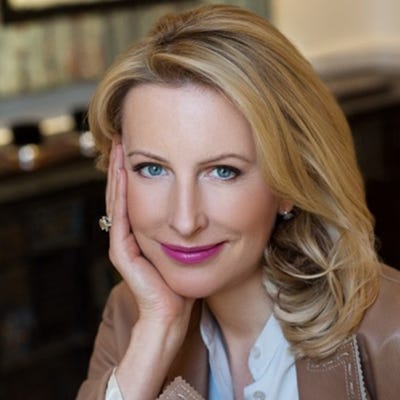
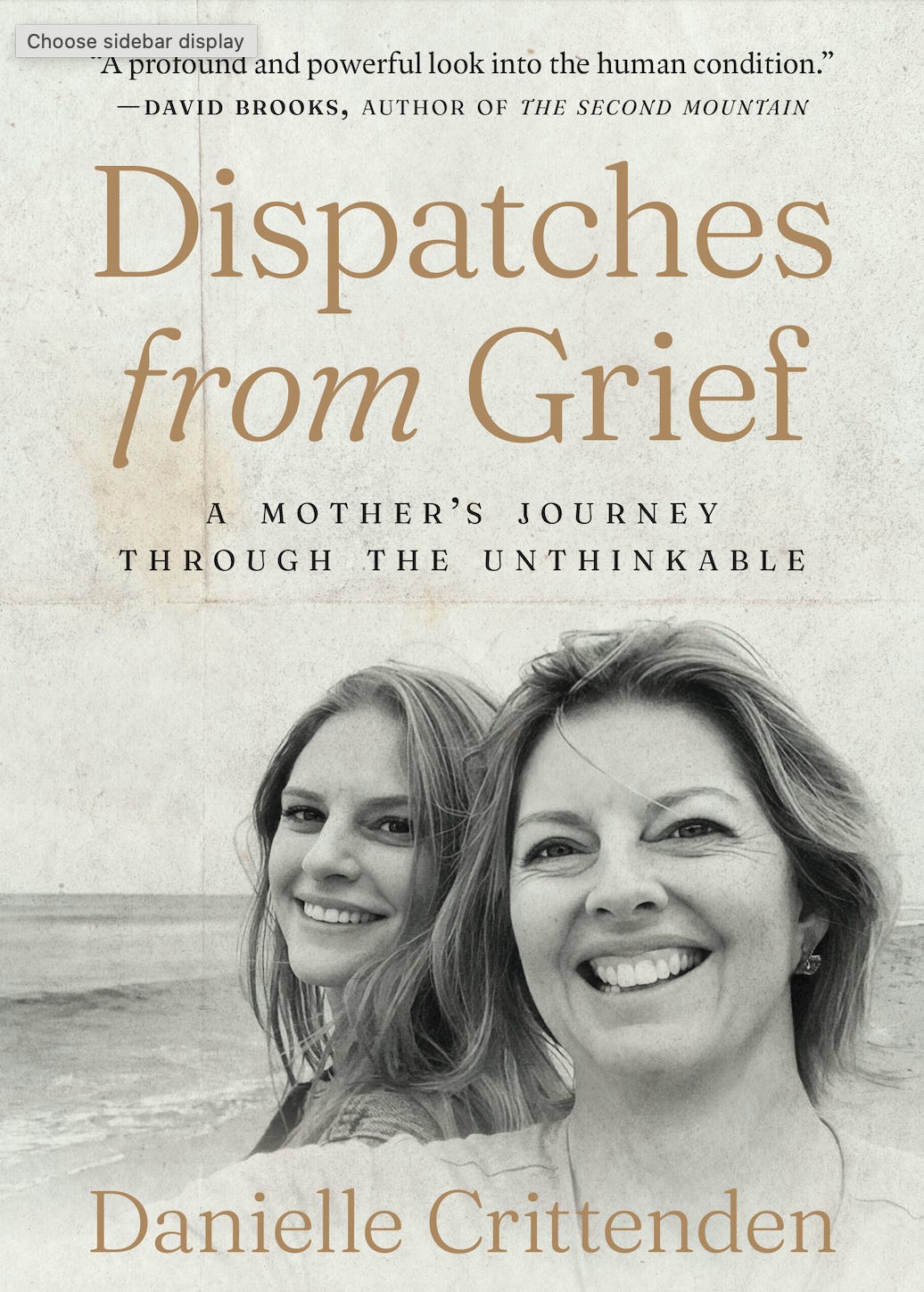
I spoke to the writer Danielle Crittenden Frum, whom I have known for many years, about her memoir: Dispatches of Grief: A Mother’s Journey Through The Unthinkable in which she describes the horrendous journey she has been on since unexpectedly losing her first-born 32-year-old daughter, Miranda, in February 2024.
She explains she didn’t intend to write a book initially, but she’s a trained reporter who comes from a family of journalists, and out of habit, she’d write down scenes and feelings in real time, feeling “like a foreign correspondent in a war zone”. Slowly she began to realize that what she had might be of value - to her and to other people.
She discovered that there’s not much useful literature out there when something this devastating occurs. She found C. S. Lewis’s memoir, A Grief Observed, on losing his wife, Joy, to cancer, helpful, but the famous Five Stages Of Grief by Elisabeth Kubler Ross was “a joke….there is no order to this grief.” And as for Joan Didion’s A Year of Magical Thinking? “It’s so name-droppy…I am not interested in what table you sat at.”
In our interview, as in her book, Danielle describes with raw honesty, suicidal ideation - “when the pain of living is so great, the peace of death beckons you” - the pain that became physical at times - she was rushed to hospital in the middle of the night, suffering a “medical grade panic attack” - and the character transformation she and her husband, David, have undergone in their effort to survive and find purpose in their lives once more. Before Miranda died Danielle’s nickname among her friends and family was “The Minister of Fun.” But, as she tells us here, she has retired from that position. Permanently.
Astonishingly - given, the unfairness of what happened, Danielle is never angry in her book - or in our interview. Miranda was felled by a mere virus, because she was juggling the cocktail of medications she was forced to take in the wake of a benign brain tumor removal five years previously. The surgeons had also had to remove her pituitary gland, leaving her reliant on cortisol and other drugs to regulate her hormones. The drugs had side-effects and she was trying to fine-tune the dosage. Danielle explains that the prescribing doctor never said to her: “One consequence of getting this wrong, is you could suddenly drop dead”. But that is what happened.
Danielle says there was no point being angry - because nothing can bring Miranda back. She learned that from a Hollywood agent friend who, it emerged, had also lost a child around Miranda’s age, and said to her and David: “If an angel were to come down to you and say: if you guys jump off a building now, Miranda can come back alive, would you do it? And we said: ”yes, of course we would.” And he said, “well, that’s not on the table.” So it just felt to me like raging at the sky was not going to bring her back.“
She talks about the agony of not being able to get into Miranda’s electronic devices fully - regardless of a court order: “Apple assumed we were either prurient people, or hackers”. And the agony of being reminded of Miranda several times a day on her own electronic devices. The trauma of seeing her child’s dead body. Of burying her in a grave without flowers (they moved her). Of saying goodbye to her apartment.
She says she could never have described this journey on paper and talked about it today were it not for Eye Movement Desensitization and Reprocessing therapy (EMDR) colloquially known as rapid eye movement therapy. “It doesn’t make the grief go away, but it does help you manage your grief better and sort of learn to live with it.”
She explains that for many people, including her own grandmother who drank herself to death after the death of her son in World War II, grief can literally kill. Your life expectancy is dramatically reduced in the wake of something like this. And how she and David feel blessed because of their strong marriage, and their network of supportive friends. And how, ultimately, Danielle sees her book as a story about parental love. Despite this loss, she and David would not change a thing. They are blessed to have had Miranda for 32 years.
I encourage everyone to watch our conversation and buy Danielle’s book here - even if you haven’t suffered a loss this devastating. Because it’s a reminder that we are all human, that death is inevitable - but that also in the depths of despair and devastation, that we are not alone.

Thank you Pamela, Karma, Debby B, Bob Fleischman, Sandy Homuth, and many others for tuning into my live video with Danielle Crittenden! Join me for my next live video in the app.