

Hey Everyone,
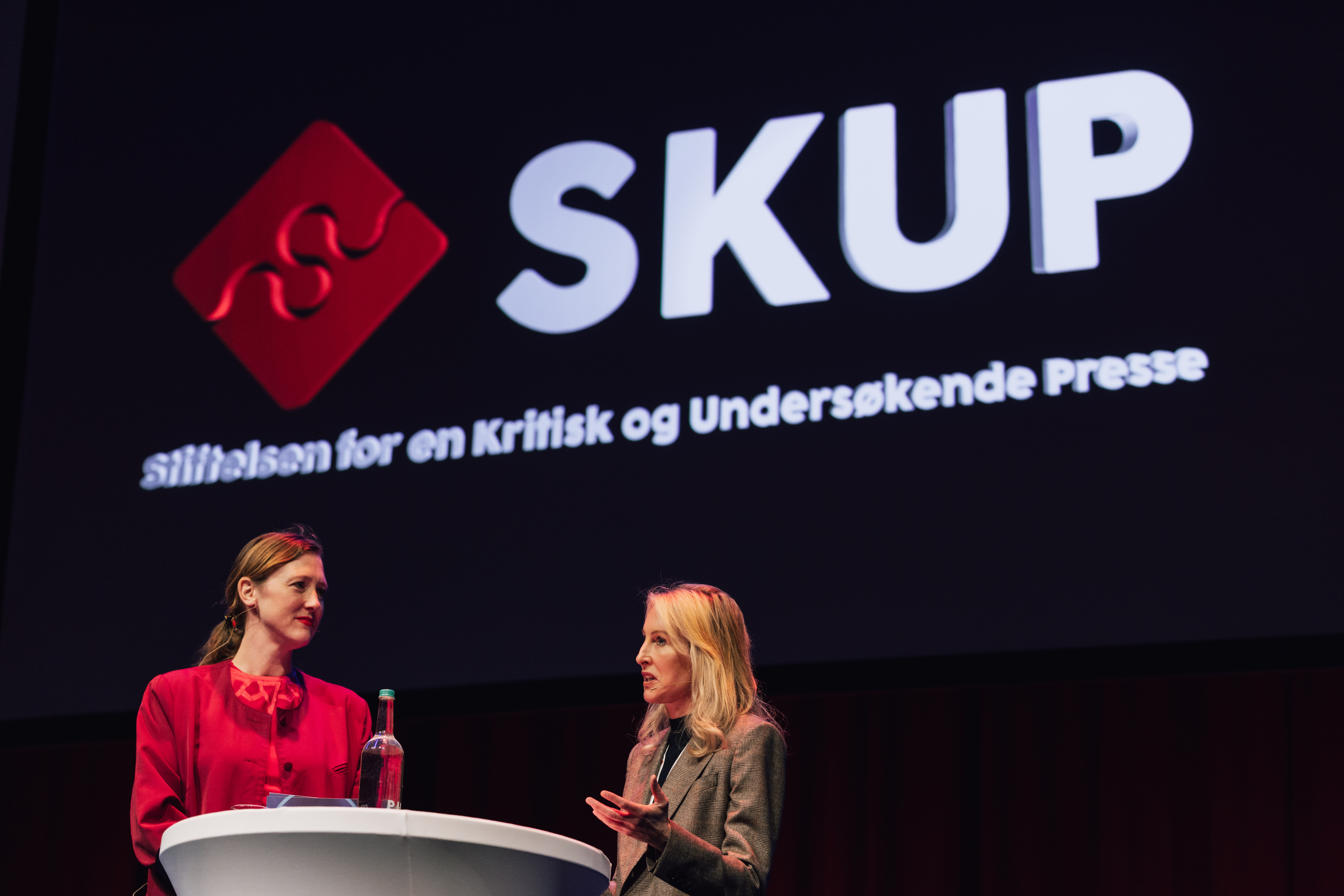
I am back from an invigorating and inspiring time in Norway as a guest of SKUP, the Norwegian Foundation for Investigative Journalism, which was holding its annual conference in Tønsberg, outside Oslo.
The weekend and its concluding awards dinner was the journalistic equivalent of the US’s Oscars weekend. I had not anticipated how enormous (there were 600 attendees) and high-profile this conference is internationally. I am not sure I have ever learned so much useful stuff on a wide variety of important, pressing topics in such a short amount of time. (There was always one English-speaking session throughout the weekend.) I kept wondering how it is that here in the US, we haven’t thought to do the same. We have a lot of catching up to do. SKUP board member Kristoffer Rønneberg told me SKUP has been at this for 30 years.
So, what happened? Yours truly kicked it off. I was interviewed on stage by Gry Veiby of NRK (the Norwegian equivalent of NPR) about my experience reporting on Jeffrey Epstein and Ghislaine Maxwell. The subject has particular significance in Norway. As I mentioned last week, you could easily make the case that of all countries, Norway’s upper echelons have been hit hardest by the revelations in Epstein’s emails.
Norway’s Crown Princess Mette-Marit has apologized for continuing a close friendship with Epstein for years after his conviction as a sex offender. Norway’s former Prime Minister, Thorbjørn Jagland, is under investigation “on suspicion of aggravated corruption” because the files revealed Jagland planned a visit to Epstein’s island in 2014. The trip was canceled, but the back-and-forth over the arrangements raised questions about conflicts of interest, given that Jagland was Secretary-General of the Council of Europe and chairman of the Norwegian Nobel Committee at the time.
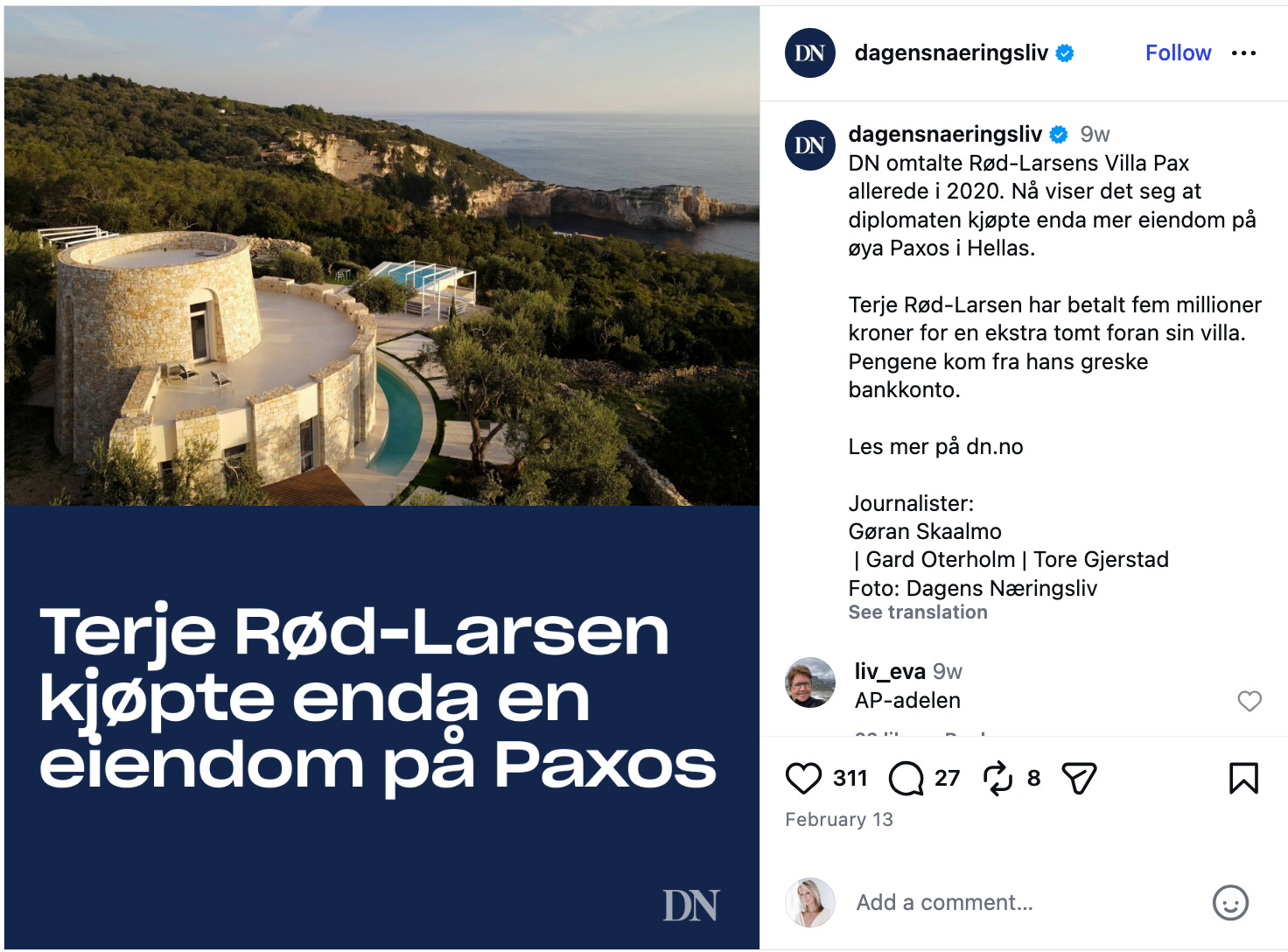
And two married Norwegian senior diplomats, Terje Rød-Larsen and Mona Juul, have had to step down from their respective posts because it emerged that 1. Terje Rød-Larsen had accepted hundreds of thousands of dollars in donations from Epstein’s foundations on behalf of his think tank, the International Peace Institute [IPI], and 2. Rød-Larsen had ccepted a $130,000 loan from Epstein in 2013 that was not disclosed to IPI's board.
Below is a photograph of the couple’s home in Paxos, Greece, that Epstein’s loan helped purchase.
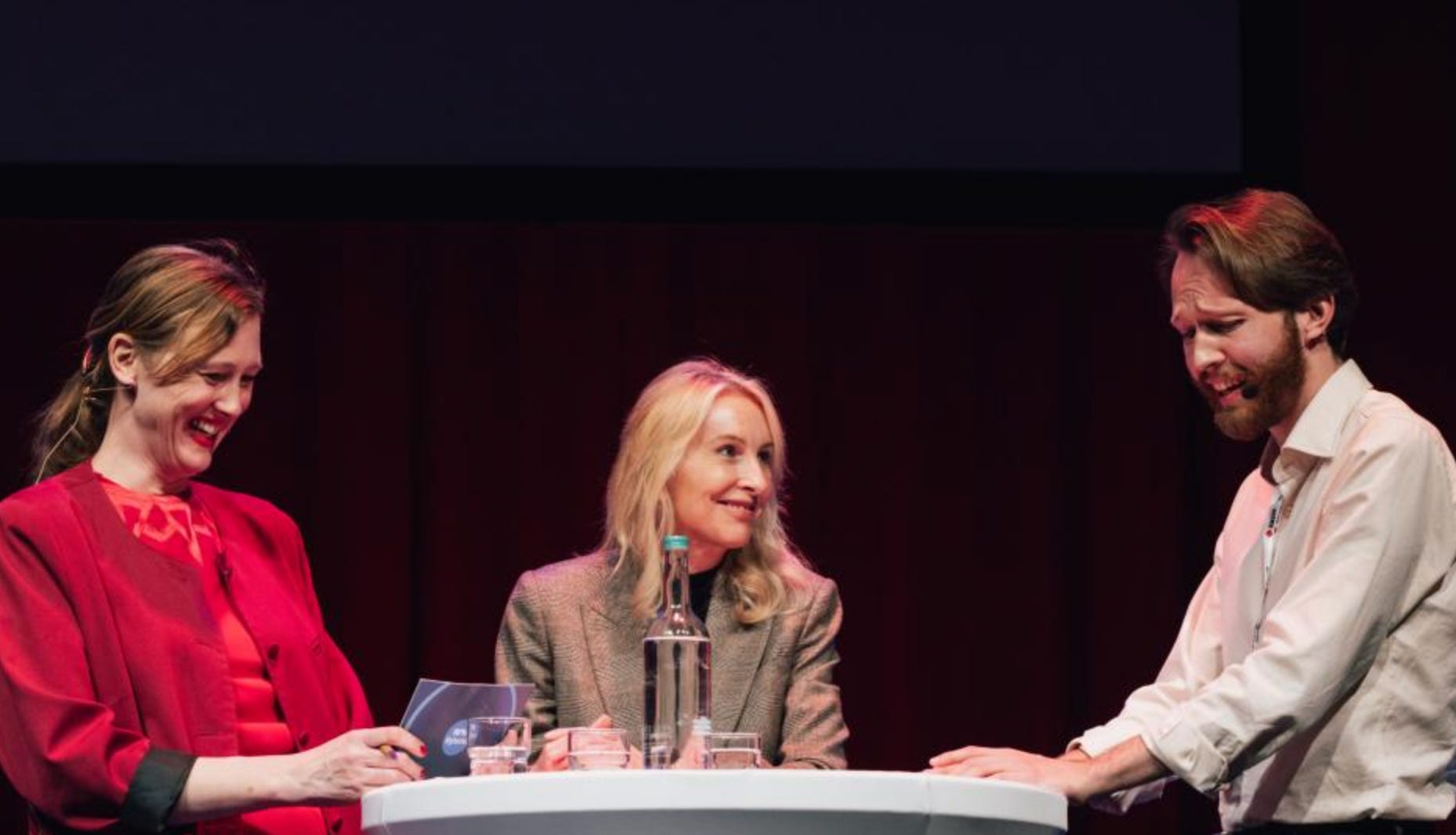
Investigative journalist Gard Oterholm of Dagens Næringsliv, Norway’s leading financial publication, joined us on stage after 30 minutes. It was Oterholm who broke the story that Rød-Larsen had accepted the money from Epstein, leading to Rød-Larsen’s resignation from IPI in 2020.
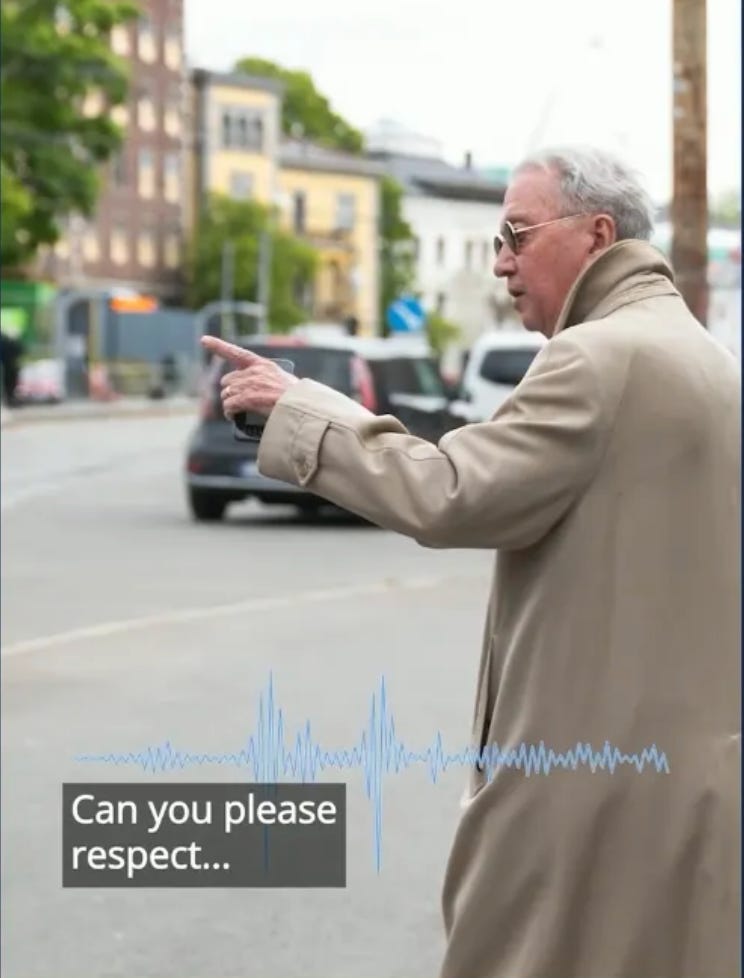
There was hilarious video and audio played on the screen behind us showing Oterholm catching up to Rød-Larsen in the street and asking about his ties to Epstein. “Can you please respect I don’t speak to Dagens Næringsliv. Is that understood?” Rød-Larsen says. (Which is like saying: “I don’t speak to the Financial Times.”)
Separately, there was audio of Oterholm cornering Jagland at a drinks reception. When asked to explain his relationship with Epstein, Jagland starts speaking abstrusely about a Chinese proverb advising one not to speak about things one doesn’t know. (Many of the journalists I spoke to concurred with Epstein’sview of Jagland, which was that he was “not bright” but “offered a unique perspective. “He failed up professionally,” one of them said. )
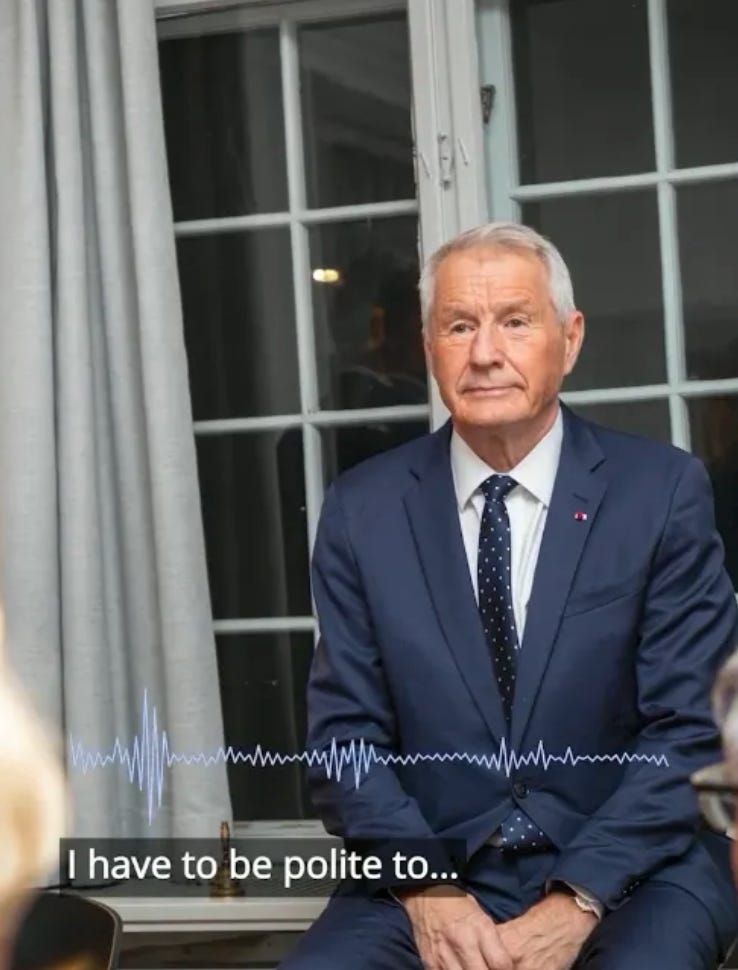
Some Norwegian journalists at SKUP told me they don't expect significant results from the government investigations because they say they will take a very long time and events will likely overtake them.
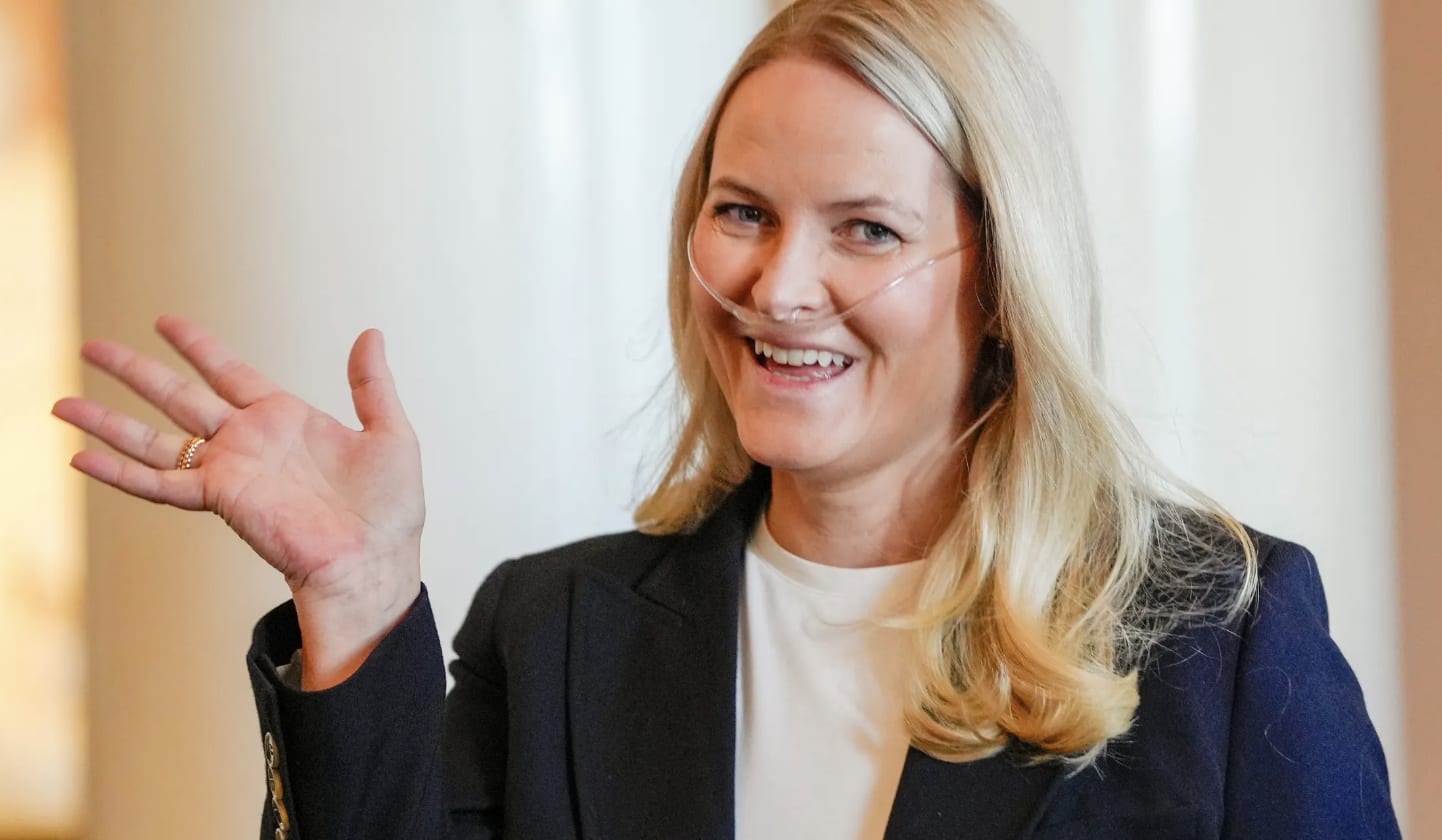
Jagland is reportedly ill, in hospital. Crown Princess Mette-Marit suffers from chronic pulmonary fibrosis and has said she is considering not becoming Queen on the grounds of her ill health. She recently showed up to an event wearing a nasal cannula. (Although there was a rumor going around the conference that she had taken up smoking again, due to the stress of all this.) Rød-Larsen is 78 and not in the best of health. Juul is now retired. Still, though there remain unanswered questions. Who introduced them all to Epstein in the first place? They met in Strasbourg in 2011, it is believed. Oterholm, for one, would like clarity and specifics and is continuing to report.
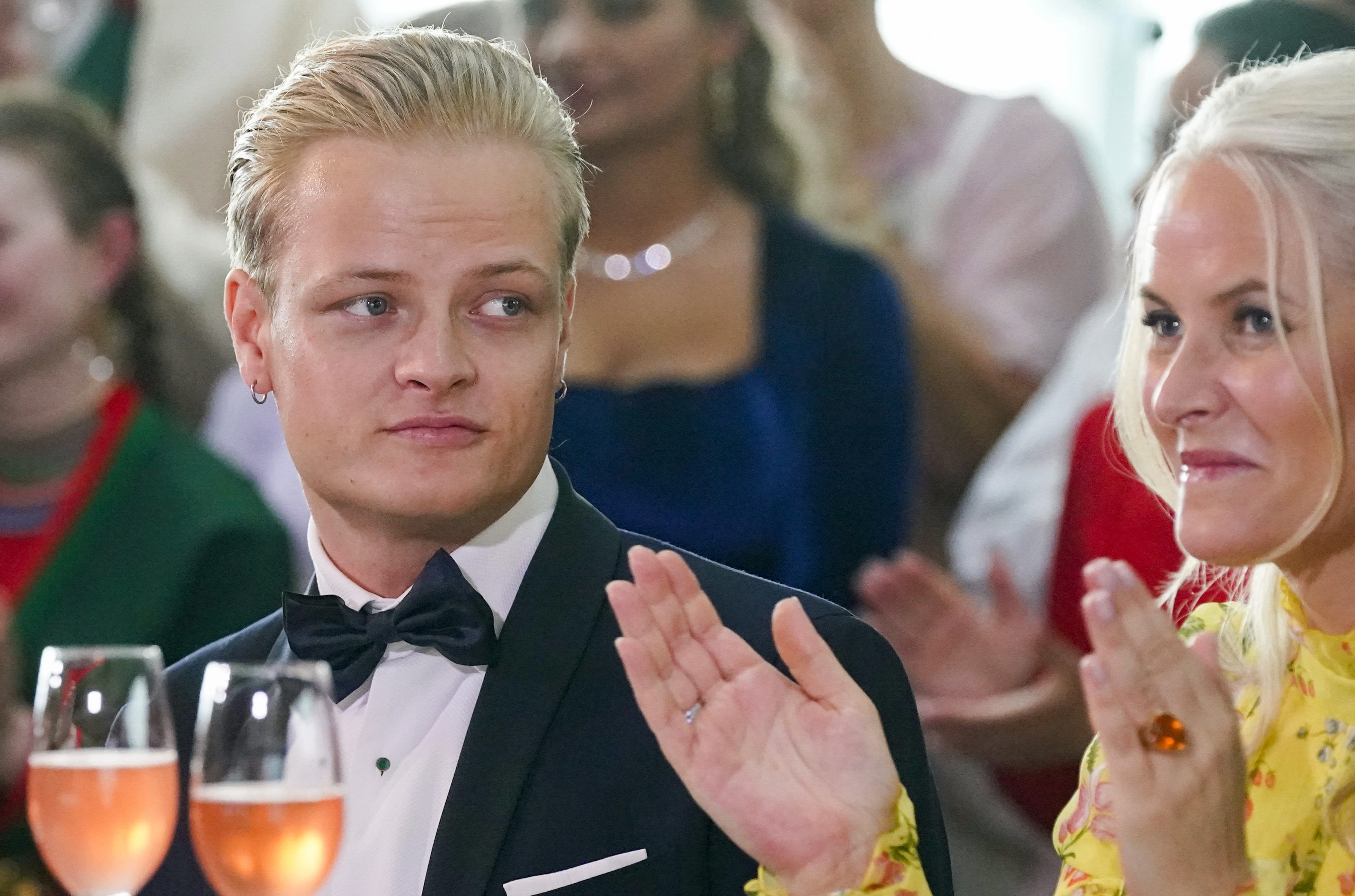
There was also a tremendous amount of talk about the Crown Princess’s 29-year-old son from a previous relationship, Marius Borg Høiby, who is awaiting the verdict of a trial in which he was charged with 39 offenses, including four rapes. The four alleged victims have not been publicly identified, but sensationally, one of them appeared at the conference, unannounced, in an off-the-record interview after dinner on Friday night.
I have been wondering why we have heard so little about the Høiby trial over here, given his mother’s friendship with Epstein, and the made-for-TV storyline about a young man who grew up as the troubled Black sheep and only non-Royal in his extended family. Turns out that’s because in Norway, the courts decide which foreign journalists get access to the hearings - and, beyond that, which tiny minority of those journalists get even deeper access to the in-camera testimony of the victims.
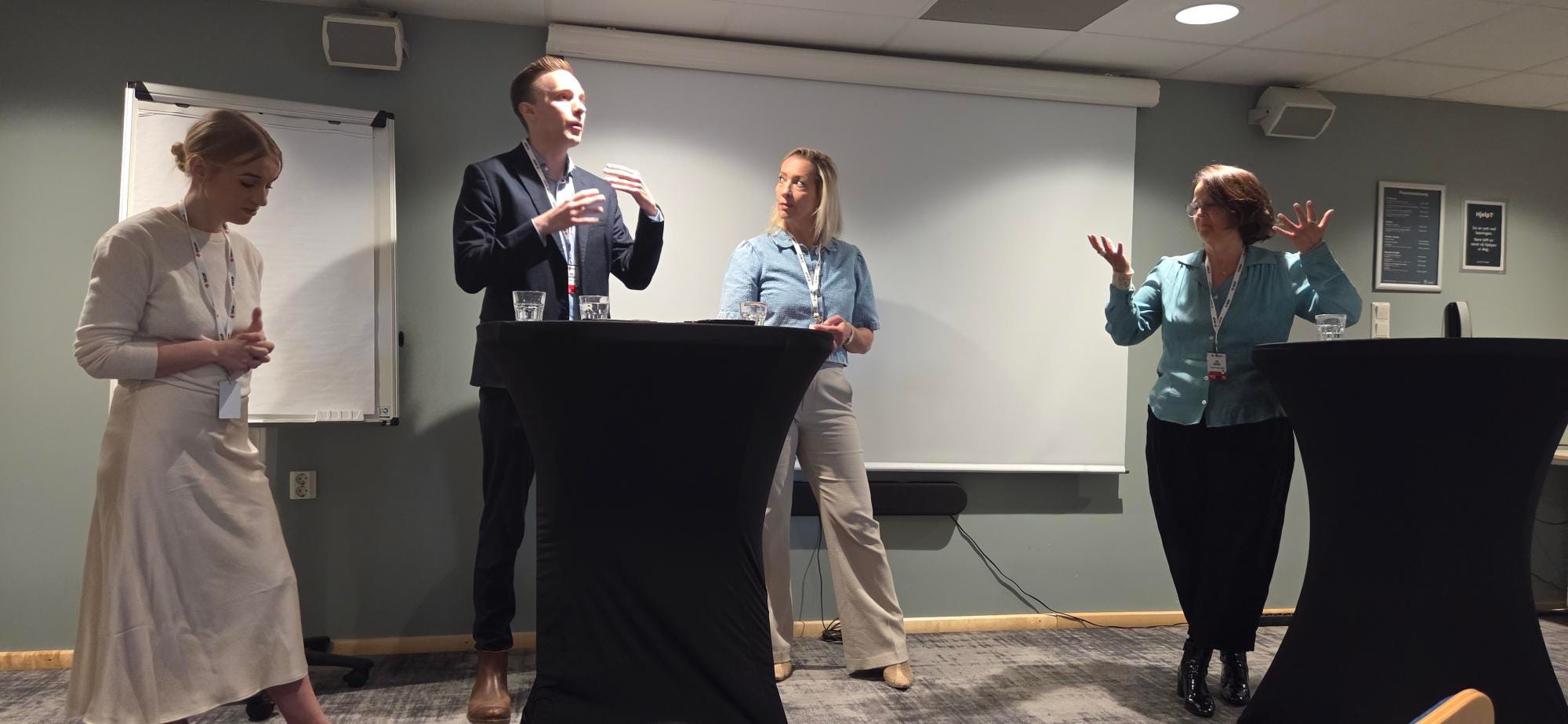
I was astonished to learn during a session featuring three European journalists who covered the case, that the victims’ testimony is not public record. In Norway, it's entirely left to the discretion of the journalists who hear it as to what to report. (Which, I would argue, puts too much responsibility on the shoulders of the press and paves the way for allegations of corruption and cronyism by the courts.)
Most stunningly of all, however, I learned that the maximum sentence Høiby can get, if he is convicted, is seven years in prison. That is: Four years for one rape, and then only one year on top of that for each of the other rapes.
Wow! Can you imagine if a man in the US were convicted of four separate rapes? In the US, the average sentence for one rape is sixteen years. If someone committed four, they’d almost certainly go to jail for life.
But in Norway, the penal system is heavily weighted towards rehabilitation. The maximum sentence, except in cases of extreme mental illness, is 21 years. And, I was told that in this small country of 5 million, this system works. Norway has one of the lowest recidivism rates in the world, often cited at approximately 20% within two years of release and 25% after five years.
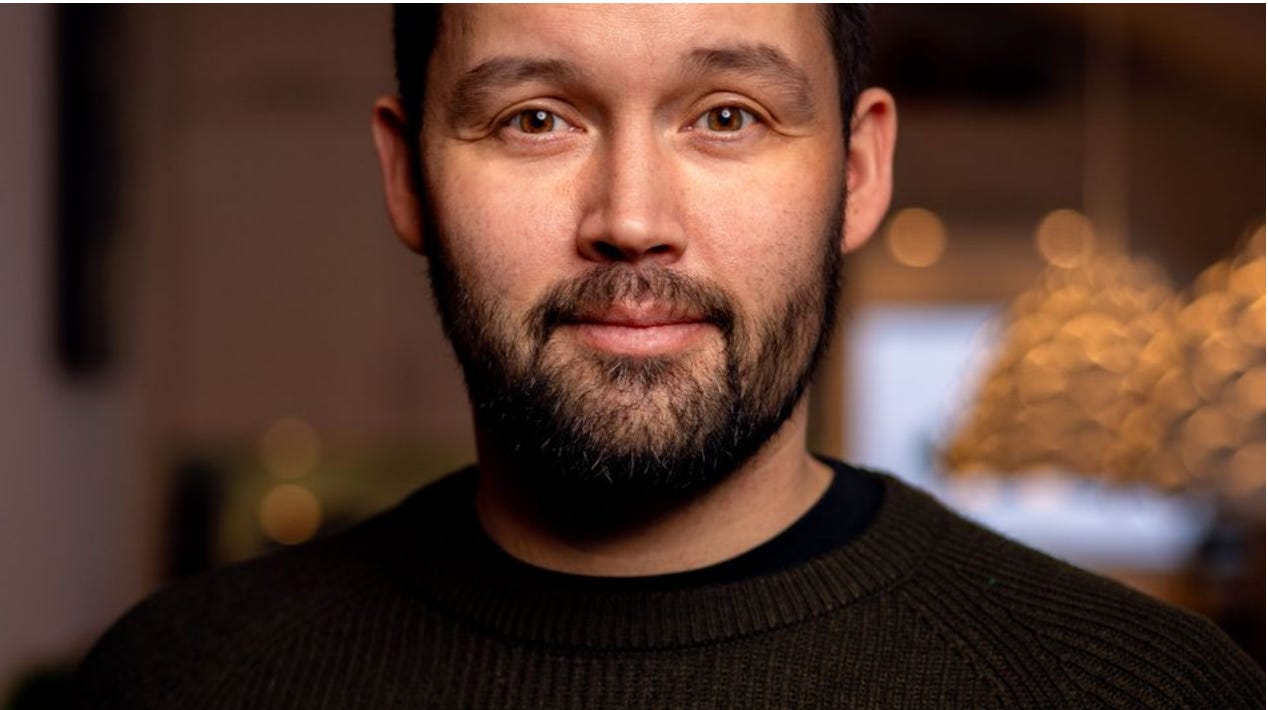
That was just one of the many fascinating things I learned this past weekend. I also learned what Masaana Egede, the CEO and editor-in-chief at Mediehuset Sermitsiaq, Greenland’s only newspaper, felt when Donald Trump Jr, and co, landed on his shores.
I also sat through a riveting, emotional seminar from a team of British Guardian journalists who investigated the new, troubling “Free Birth” movement in the US. Why, I wondered, is this important topic under-reported here? (As if on cue, the New York Times reported on it yesterday.)
And I sat through illuminating sessions from Dylan Freedman, the New York Times’ AI editor, and Foeke Postma from Bellingcat. I learned about OSINT. And the BBC’s undercover journalism. And much, much more.
Most of all, I learned that the Norwegian press is vibrant, energetic, and engaged.
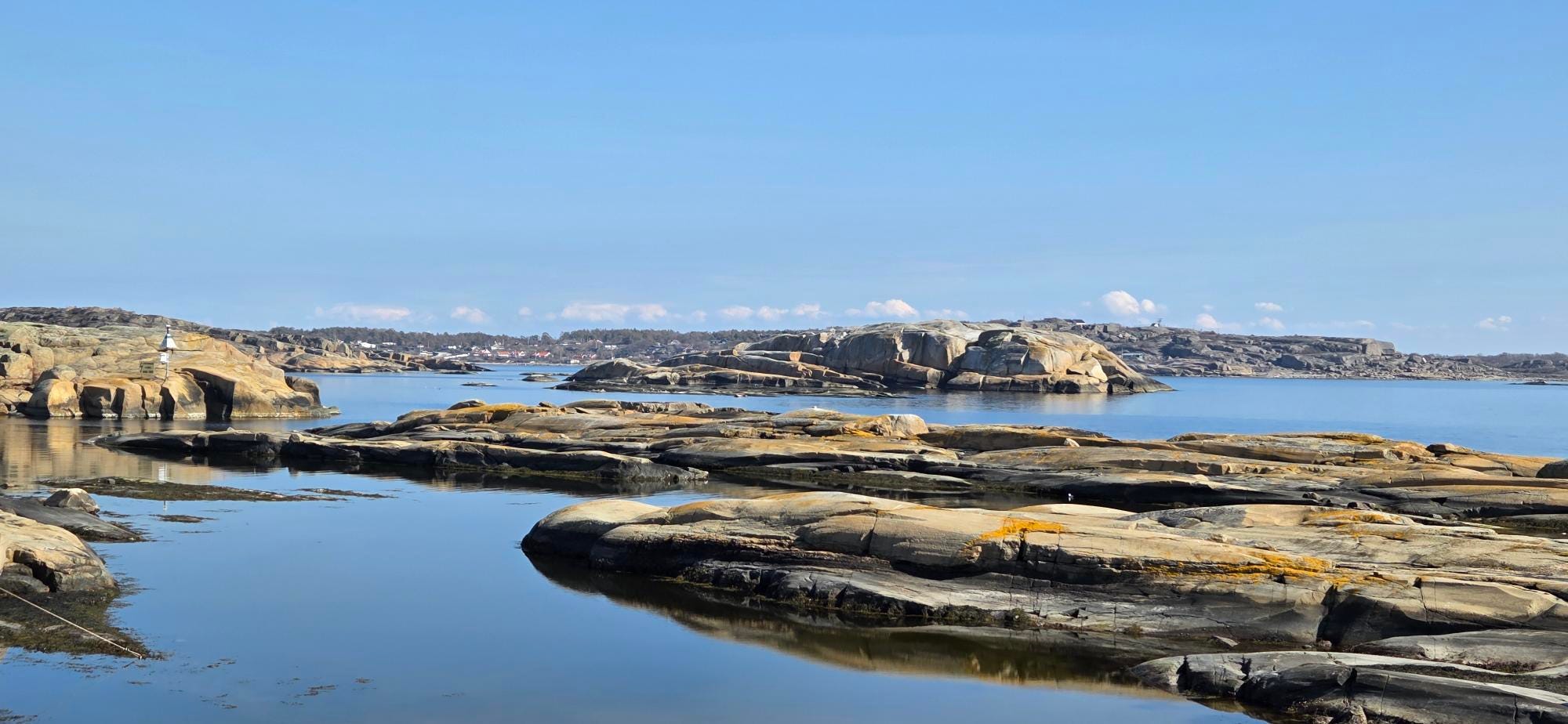
And, yes, I also did get to see Verdens Ende [The End of the World] on a glorious sunny day.

Wow…there is so much good … and bad … in the world.
Great summary! Thank you so much for joining us at this year’s conference. So happy you made the most of it and that you found it to be inspirational. That’s our goal!